Improving forecasting accuracy with AI-powered forecasting
Enterprises face unpredictable interaction volume across voice and digital channels. Workforce management (WFM) uses AI-powered forecasting to analyze historical patterns, seasonality and emerging trends. Organizations apply this intelligence to improve planning accuracy, minimize overstaffing and maintain service levels with greater confidence.
Strengthening resource planning through capacity planning
As business conditions shift, many contact centers struggle to scale staff effectively. Capacity planning provides scenario modeling and long-range insight into staffing requirements. Enterprises use WFM to evaluate demand changes, prepare for peak periods and make more strategic staffing decisions that optimize labor investment.
Maintaining operational discipline with real-time adherence
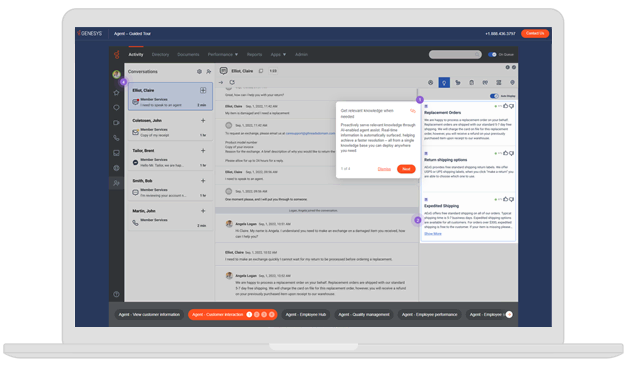
Small deviations in agent schedules can significantly affect service levels. Real-time adherence (RTA) monitors agent activity against planned schedules to identify gaps quickly. Enterprises apply this capability to improve consistency, reduce wait times and empower supervisors to make real-time adjustments that support smooth operations.
Supporting employee well-being with flexible scheduling
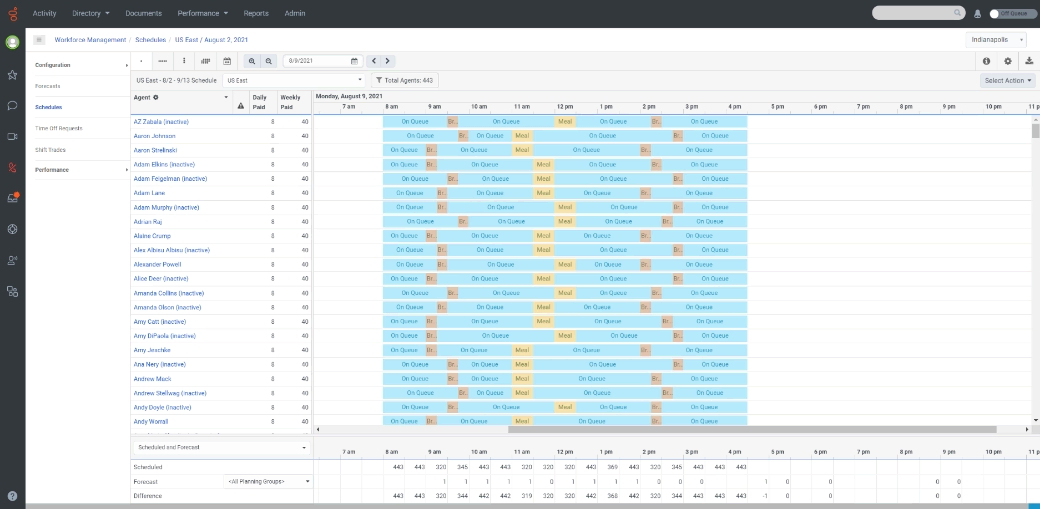
Rigid scheduling models can harm morale and increase attrition. Workforce management (WFM) tools enable flexible scheduling, shift bidding and preference-based assignments. Enterprises use these features to improve fairness, enhance employee satisfaction and build a more engaged hybrid workforce.
Increasing operational efficiency with WFM automation
Manual processes slow down workforce planning and introduce errors. WFM automation streamlines tasks such as scheduling, intraday updates and shift adjustments. Enterprises rely on automation to reduce administrative burden, accelerate decision-making and ensure staffing aligns with real-time changes in demand.